
Pipe materials
What pipes are in a condominium building?
A condominium building has several pipe systems, and its water supply, drains, heating and sprinklers can use different materials. A building that has been renovated can mix several eras. Knowing what is in the walls is the first step in judging how the system is likely to behave.
By ProShield Leak Detection Inc. · Updated
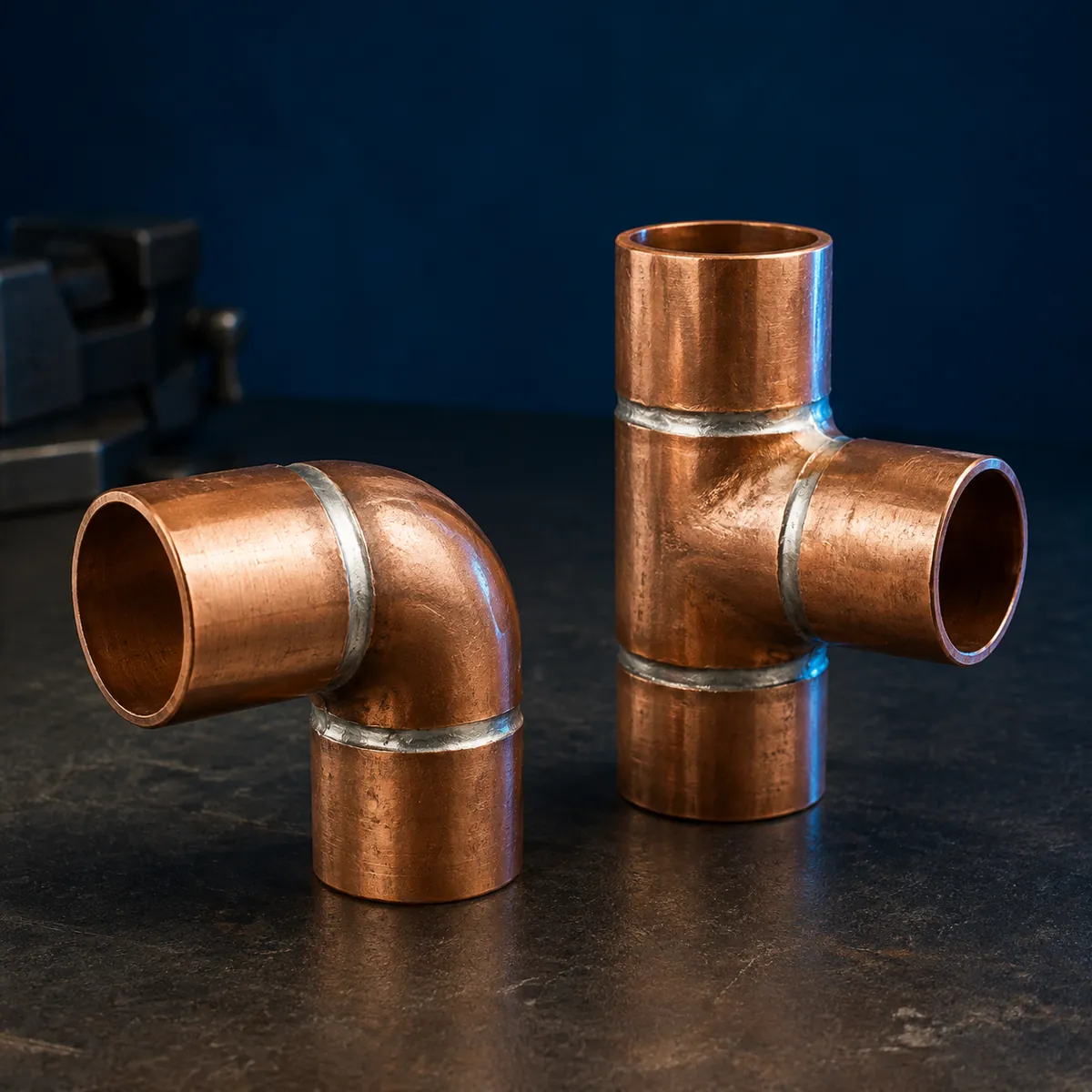
A building can mix materials, and its own records and a physical check say which.
Public sources describe several pipe materials in Canadian multi-unit buildings. Copper, Poly-B, PEX and CPVC carry water. In older work galvanized steel was permitted for plumbing pipes until 1980. Kitec pipe was installed from the mid-1990s until about 2007. The plumbing code names cast iron, ABS and PVC among the materials for drainage. One building can have more than one, because repairs and renovations replace some runs and leave others.
Age narrows the possibilities but does not settle them. The building’s drawings, permits and reserve fund study are the places to start, and a look in the mechanical room can confirm exposed pipe. The rest of this guide describes each material, what public sources say about when it was used, and how it tends to fail.
Copper pipe can develop pinhole leaks.
Health Canada describes copper plumbing with lead–tin solders (widely used until 1989) and brass faucets and fittings as predominant in domestic plumbing systems. It says the National Plumbing Code prohibited lead solders in new plumbing and in repairs to plumbing for drinking water supplies in its 1990 version.
One copper failure described in public sources is localized pitting corrosion that works through the pipe wall and appears as a pinhole leak. Erosion corrosion is another: a 2017 Foundation for Water Research review of the causes of copper corrosion says it is caused by continuous high water velocities, especially in hot water return lines, and is usually found in hot water recirculating systems. Why pinholes happen, and what a building can do about it, is covered in pinhole leaks in copper pipes.
Poly-B is grey plastic pipe that reached Alberta buildings in the mid-1970s, and production stopped in 1998.
Alberta Municipal Affairs says Poly-B (polybutylene) piping was introduced to the Alberta construction industry in the mid-1970s and that manufacturers stopped producing it in 1998. It identifies Poly-B as flexible, light grey plastic pipe with printed markings that give the material designation and a construction standard such as CSA B137.8.
The Insurance Bureau of Canada says Poly-B is susceptible to breaking because it reacts with chlorine in water, is sensitive to UV light and heats up quickly. It also says some insurers may have exclusions for Poly-B, and it tells owners to contact their insurance representative. Poly-B pipe in Edmonton condominiums covers identification and next steps in detail.
PEX is the modern flexible plastic, and its ratings matter.
PEX is cross-linked polyethylene. The Plastics Pipe Institute, the plastic-pipe industry association, says it was introduced to the United States and Canada in the 1980s for heating and plumbing. The National Plumbing Code of Canada 2020, which Alberta lists as in force from April 1, 2023, requires PEX and its fittings in hot and cold potable water systems to conform to the standard CSA B137.5. Ask the City which edition applies to a particular building.
PEX is not one product. The three common ways of cross-linking the material are called PEX-a, PEX-b and PEX-c, and the Institute says those letters are not a performance rating. The code printed on the tubing matters more: its digits record the tested chlorine and UV resistance. The Institute says testing to ASTM F2023 has been mandatory for PEX cold- and hot-water tubing since 2003.
Like any plastic, PEX has limits. The Institute says frequent or continuous exposure to water more aggressive than the test conditions may cause premature oxidation and eventual brittleness, and that sunlight can damage the tubing, so it should not be stored outdoors. Fittings vary too: lead-free brass and polymer fittings are made in cold-expansion and insert styles.
CPVC is rigid plastic with chemical sensitivities.
CPVC (chlorinated polyvinyl chloride) hot and cold water pipe must conform to the Canadian standard CSA B137.6. The code also limits the pressure it may carry as the water gets hotter: for example 1,300 kPa at 60 °C and 690 kPa at 82 °C.
One practical concern is chemistry. Lubrizol, a CPVC resin supplier, states that its piping systems have occasionally been damaged by contact with incompatible products such as thread sealants, leak detectors and firestops. Charlotte Pipe, a CPVC manufacturer, warns that residual cutting oils on metal pipe may be incompatible as well. A repair that brings the wrong product into contact with CPVC is one way sound pipe gets damaged.
Galvanized steel belongs mostly to older systems.
Health Canada says the National Plumbing Code permitted galvanized steel for plumbing pipes until 1980. The 2020 National Plumbing Code of Canada says galvanized steel pipe and fittings shall not be used in a water distribution system except in buildings of industrial occupancy or to repair existing galvanized steel piping systems. Which edition applies to a particular job is worth confirming with the authority that permits the work.
Galvanized pipe corrodes from the inside out, and the Insurance Bureau of Canada says that causes leaks. Health Canada adds that galvanized pipes release zinc and can be a source of cadmium and lead, which are present as impurities.
Kitec looks like a plastic pipe but is a different system.
Kitec is a pipe system with brass fittings. The Canadian Condominium Institute says it was installed in low- and high-rise residential buildings in the United States and Canada from the mid-1990s until about 2007, and that it is usually bright orange or bright blue. Its brass fittings have a high zinc content and are subject to premature failure by dezincification.
Colour is a clue, not proof. Alberta describes Poly-B as light grey, while Kitec is usually bright orange or bright blue. For Poly-B, the printed markings give the manufacturer, size and construction standard, so check them too.
Drain, waste and vent pipe uses different materials again.
Cast-iron drainage and vent piping must conform to CSA B70, and cast-iron soil pipe may not be used in a water system. Plastic drain, waste and vent pipe used inside or under a building must conform to a standard the code lists, including CSA B181.1 for ABS and CSA B181.2 for PVC and CPVC.
The Cast Iron Soil Pipe Institute, which was organized by American manufacturers of cast iron soil pipe and fittings, says internal corrosion of cast iron soil pipe and fittings can be caused by strong acids or other aggressive reagents with a pH of 4.3 or lower if they stay in contact with the pipe for an extended period. Telling a drain leak from a supply leak is an early step in an investigation, and water, drain, heating and sprinkler pipes explains how.
Older buildings can also have lead in service lines and solder.
Health Canada’s 2019 guidance says widespread installation of lead service lines occurred in Canada until 1975, and that solder containing lead continued to be used in new plumbing and repairs until 1986. Its 2025 document describes lead-tin solders as widely used until 1989, so sources give slightly different end dates. EPCOR, Edmonton’s water utility, says a home built before 1960 may have a lead water service line, because lead was then used by homebuilders for service lines.
EPCOR’s suggested check is to inspect the pipe coming out of the ground and into the water meter and look at its colour: grey means galvanized iron or lead, and the only way to be sure whether you have a lead service line is to have your water tested. EPCOR also says the property owner is responsible for the service line from the property line to the water meter. A condominium corporation should check with EPCOR how that applies to its building.
Health Canada says flushing the cold water tap has not been found to reduce lead exposure sufficiently and consistently in multi-dwelling residences and large buildings, and that lead analyses should be done by an accredited laboratory.
Pipe materials at a glance.
A summary of what the public sources cited on this page say. Dates describe when a material was used or regulated, not how long a particular installation will last.
| Material | Where it is used | What public sources say | Concern public sources describe |
|---|---|---|---|
| Copper | Domestic hot and cold water | Lead-tin solder was widely used until 1989 and prohibited for drinking water supplies in the 1990 code. | Localized corrosion that becomes pinhole leaks |
| Poly-B | Domestic water | Introduced to Alberta construction in the mid-1970s; production stopped in 1998. | Chlorine-related degradation and fitting failures are both reported, and the cause is disputed |
| PEX | Domestic water and heating | Introduced to Canada in the 1980s; Canadian standard CSA B137.5. | Premature oxidation in water more aggressive than the test conditions, and UV damage |
| CPVC | Hot and cold water | Must meet CSA B137.6; pressure limit falls as temperature rises. | Damage from incompatible sealants, firestops and oils |
| Galvanized steel | Older water supply | Permitted by the National Plumbing Code until 1980; the 2020 national code allows it in a water distribution system only in buildings of industrial occupancy or to repair existing galvanized steel piping. | Internal corrosion; releases zinc and can carry lead impurities |
| Kitec | Domestic water in some buildings | Installed from the mid-1990s until about 2007. | Brass fitting dezincification and pipe rupture risk, according to one condominium institute article |
| Cast iron | Drain and vent | Must meet CSA B70; not allowed in water systems. | Internal corrosion from aggressive chemicals |
| ABS and PVC | Drain and vent | Must conform to a listed standard, including CSA B181.1 (ABS) and CSA B181.2 (PVC and CPVC). | Combustible material in non-combustible construction; detailing where it passes through a fire-resistant separation can be difficult and expensive |
How to find out what your building has.
Work from records first, and confirm by looking.
- Start with the original drawings, building permits and any renovation records. They may name the material, and they can date the work.
- Read the reserve fund study. Alberta’s regulation requires it to list the depreciating property that may need repair or replacement within the next 30 years or longer and to estimate when each component will need it, and it is worth asking the provider whether the study describes the piping.
- Look in the mechanical room, at the water meter and under sinks. Look for printed markings on the pipe; on Poly-B, Alberta Municipal Affairs says they give the manufacturer, size and construction standard.
- For the pipe entering the water meter, use EPCOR’s colour guide, and have the water tested if lead is possible.
- Ask a licensed plumber or an engineer to confirm. If the building may have Poly-B or Kitec, that is a reason for a professional inspection.
Where ProShield fits.
ProShield does not replace piping. It investigates leaks, documents what it finds and helps buildings plan protection. Knowing the material makes that work faster, so a clear record of what is in the walls is worth keeping. See how hidden pipe leaks are found and pipe condition assessment for condominiums.
Sources and further reading
- Health Canada: Guidance on controlling corrosion in drinking water distribution systems (2025)
- Alberta Municipal Affairs: Safety tips on polybutylene (Poly-B) pressure water piping (2016)
- Plastics Pipe Institute: Ultraviolet resistance of PEX tubing (2021)
- National Plumbing Code of Canada 2020, Division B (copy hosted by the Regional District of Nanaimo)
- Canadian Condominium Institute (Toronto): What to do about Kitec pipes (2022)
- State of Maryland: Final report of the Task Force to Study Pinhole Leaks in Copper Plumbing (2004)
- Health Canada: Guidelines for Canadian Drinking Water Quality, technical document on copper (2019)
- Foundation for Water Research (UK): Causes of copper corrosion in plumbing systems (2017)
- Insurance Bureau of Canada: Know your home’s history and the issues lurking within its walls (2025)
- Government of Alberta: Plumbing codes and standards
- Plastics Pipe Institute: TN-53, Chlorine resistance ratings of PEX pipe and tubing (2025)
- Plastics Pipe Institute: TN-17, Crosslinked polyethylene (PEX) pipe and tubing systems
- Construction Canada: Plumbing with PEX (2022)
- Lubrizol: Chemical compatibility of CPVC piping systems (2019)
- Charlotte Pipe: Chemical compatibility and installation information for CPVC products (2025)
- Cast Iron Soil Pipe Institute: Cast iron soil pipe and fittings handbook
- Health Canada: Guidelines for Canadian Drinking Water Quality, technical document on lead (2019)
- EPCOR: Lead and your drinking water
- Polybutene Piping Systems Association: Answers to frequently asked questions (an association whose members sell polybutene-1 piping systems)
- BC Housing: Builder Insight 16, alternatives to domestic water re-piping (2016)
- Alberta Condominium Property Regulation (Alta Reg 168/2000)
Questions people ask
How can I tell if I have Poly-B?
Look for flexible, light grey plastic pipe with printed markings that give the material designation and a standard such as CSA B137.8. Colour is only a first clue: Kitec, a different system, is usually bright orange or bright blue. A plumber or inspector can confirm.
Is Poly-B illegal?
No. Alberta Municipal Affairs says Poly-B is no longer listed in the current plumbing codes, but codes are not retroactive, so previously acceptable products remain acceptable if they pose no health or safety hazard. Insurers may set their own conditions.
What is the difference between Poly-B and PEX?
Poly-B is polybutylene, introduced to Alberta construction in the mid-1970s; manufacturers stopped producing it in 1998. PEX is cross-linked polyethylene, which the Plastics Pipe Institute says was introduced to the United States and Canada in the 1980s, and the Institute says testing to ASTM F2023 has been mandatory for PEX cold- and hot-water tubing since 2003.
Are old copper pipes with lead solder a problem?
Health Canada says lead-tin solder was widely used until 1989 and that the plumbing code prohibited lead solders for drinking water supplies in 1990. EPCOR says the only way to be sure whether a service line is lead is to have the water tested.
Who is responsible for the water service line into a building?
EPCOR says the property owner is responsible for the portion of the service line from the property line to the water meter in the building. A condominium corporation should confirm with EPCOR how that applies to its property.