Poly-B pipe
Poly-B pipe in Edmonton condominiums: what boards should know
Poly-B, or polybutylene, is a flexible plastic water pipe that Alberta describes as light grey, and it was installed in Canadian buildings for more than 20 years. Alberta Municipal Affairs’ 2016 fact sheet says it is no longer listed in the current plumbing codes, although codes are not retroactive and previously acceptable products remain acceptable if they do not pose a health or safety hazard, and it gave an unconfirmed estimate that about 148,000 Alberta homes have Poly-B water systems. Whether it is a problem for a particular building depends on the building’s records, its insurer and how its pipe and fittings are behaving.
By ProShield Leak Detection Inc. · Updated
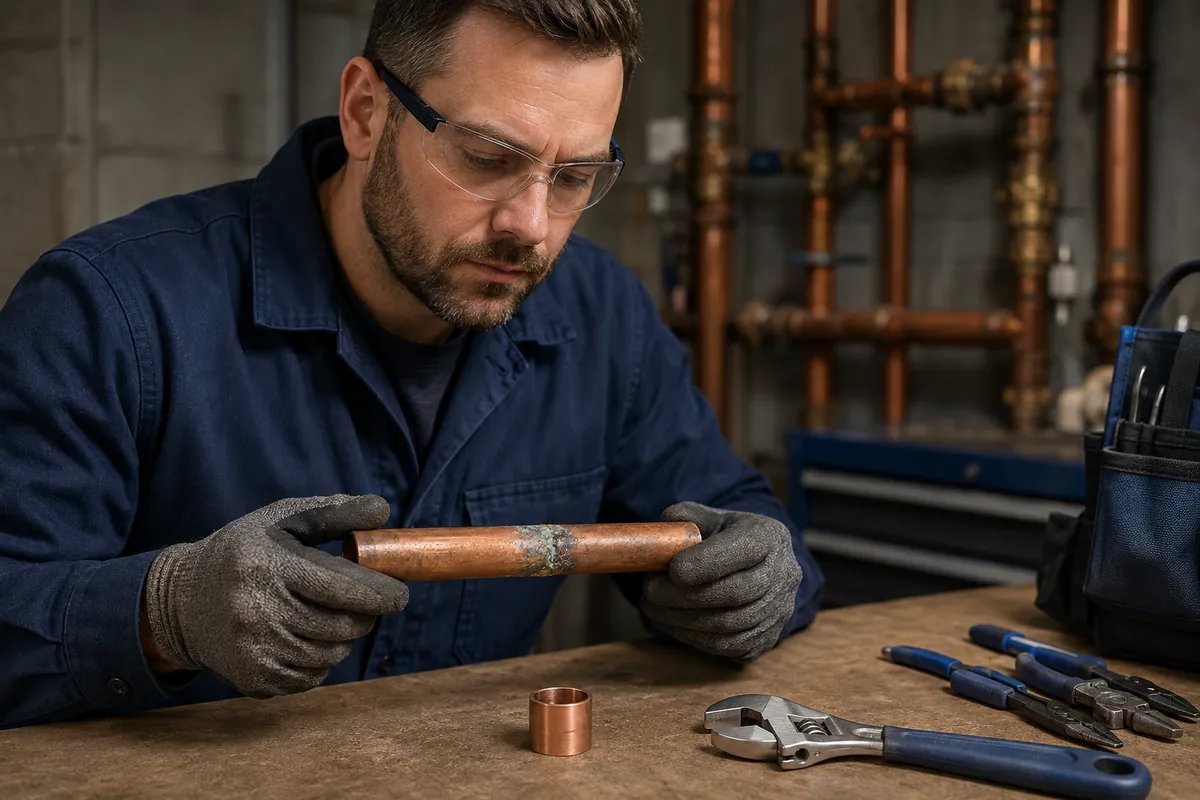
Poly-B is no longer listed in the plumbing code, but codes are not retroactive.
Alberta Municipal Affairs says Poly-B is no longer listed in the current plumbing codes. It also says codes are not retroactive: products that were acceptable when installed remain acceptable if they do not pose a health or safety hazard. That statement does not say that replacement is required.
The pressure to act can come from elsewhere, notably insurers. The Insurance Bureau of Canada says some insurers may have exclusions for Poly-B, and that a professional should inspect the plumbing system because the Poly-B may require replacing. A brokerage, Westland Insurance, says that if you have Poly-B the insurance company may add a surcharge, give a deadline to replace it, deny water damage coverage or deny any property coverage. Its advice appears to be written for individual policyholders. Those are possibilities, not rules, and they differ by insurer, so the board should ask its own broker directly.
What Poly-B is, and when it was used in Alberta.
Poly-B is polybutylene, a flexible plastic pipe. Alberta Municipal Affairs says it was introduced to the Alberta construction industry in the mid-1970s, that it was installed in homes and commercial buildings throughout Canada for more than 20 years, and that manufacturers stopped producing it in 1998. The same fact sheet gives an unconfirmed estimate of about 148,000 Alberta homes with Poly-B water systems; the sheet does not say whether condominium buildings are included in that figure.
Alberta Municipal Affairs says Poly-B was tested and certified by CSA and remained an acceptable product for potable water systems, but stipulated that the pipe was not to be used for continuous circulating hot water lines, as listed in the 1995 National Plumbing Code of Canada. That can matter in a building with a hot water recirculation loop. If a building’s hot water circulation lines are Poly-B, raise it with an engineer.
Poly-B production stopped in 1998, so a building whose plumbing was installed well after that is unlikely to have it.
The City of Edmonton’s open property data reports a year built for condominium building addresses, and the linked guide counts how many fall in the Poly-B years. Year built is not a pipe record. See Edmonton condo buildings by year built.
How to identify Poly-B.
Alberta Municipal Affairs describes Poly-B as flexible plastic piping with a light grey colour. Printed markings on the pipe give the size, the manufacturer’s name or trademark, a date code, the material designation, the pressure rating, the certification agency and the construction standard, for example CSA B137.8.
Colour alone is not a safe test. Kitec, a different pipe system, is usually bright orange or bright blue, and a building can hold more than one type. Look where pipe is already exposed, and do not cut or disturb pipe to check it. Ask a plumber or inspector to confirm.
- Under kitchen and bathroom sinks, where supply lines leave the wall.
- At the water heater, the meter and in the mechanical room.
- In a suite’s shutoff or service panel, and at access panels to risers.
- At the fittings. Alberta installations primarily used copper or brass insert fittings with soft copper crimp rings; plastic insert fittings with aluminum bands are reported to be more susceptible to failures that cause leaks.
Why Poly-B fails, and what is disputed.
Poly-B has a history of failures, and the sources differ on why. Failures of Poly-B pressure water piping in Canada and the United States led to class action lawsuits. The Insurance Bureau of Canada says the pipe is susceptible to breaking because it reacts with chlorine in water, is sensitive to UV light and heats up quickly. An insurance broker’s bulletin (BFL Canada, 2020) says common failures centre on the material’s sensitivity to both temperature and chlorine, and that the degradation occurs on the inside wall of the pipe, so piping can be dangerously degraded but look perfectly normal on the outside. A laboratory paper hosted by the Plastics Pipe Institute says early failures have been attributed to accelerated degradation due to chlorine in potable water, and that failures of both the pipe and the acetal fittings have been reported.
Other sources point to fittings and workmanship. The Polybutene Piping Systems Association (PBPSA), whose members have polybutene-1 piping systems products and have decided not to sell them into North America, says premature failures were caused by acetal fittings and poor joint assembly techniques. It is an interested party, and the sources above point mainly to chlorine and temperature. An Alberta Municipal Affairs fact sheet from 2002 said the department was aware of approximately four Poly-B failures in Alberta over the last 20 years, all related to improper installation procedures. That is a 2002 statement; Alberta Municipal Affairs’ 2016 fact sheet, cited above, says failures of Poly-B pressure water piping in Canada and the United States led to class action lawsuits.
For a board, the useful conclusion is that a leak can start at a fitting or in the pipe wall, and pipe can look normal on the outside while it is weakened from within. Evidence about a particular building matters more than general reports: its records, its leak history, its insurer’s position and a professional inspection of its own pipe and fittings.
What a board can do now.
None of these steps commits the building to replacement. Each produces evidence the board needs whichever way it decides.
- Confirm what the building has: original drawings, permits, renovation records, the reserve fund study, and a professional inspection of accessible pipe.
- Keep a leak log: date, suite, hot or cold line, location, whether the failure was in the pipe or at a fitting, and the repair made.
- Ask the corporation’s insurance broker, in writing, what the policy says about Poly-B and whether the insurer has asked about it.
- Have an engineer or licensed plumber report on the condition of pipe and fittings in representative areas, and ask whether pipe samples should be tested. See pipe condition assessment for condominiums.
- Plan for the possibility of replacement even if none is required today: the reserve fund study, timing and how owners will be told. See repipe, line or treat for how the options compare.
- While the pipe remains in service, know where every shutoff is and consider leak sensors and automatic shutoff. See leak sensors and automatic shutoff planning.
If the board decides to replace it: permits, responsibility and access.
Replacing Poly-B is plumbing work. In Alberta a plumbing permit is required to install, alter or add to a plumbing system, and in Edmonton the City lists apartments and condos under its plumbing and gas permit for new buildings and changes to existing buildings, where applicants must hold a City business licence and be a certified plumber or gas fitter registered with the City. The applicant is therefore normally the plumbing contractor, and the City says failure to complete required inspections may mean removing finished walls. See repipe, line or treat for the full process, including access to suites and shutdowns.
Who is responsible depends on the condominium’s own documents. Service Alberta says a condominium plan may provide additional information about what items, such as pipes, are common property, and that unit owners are typically responsible for repairing and maintaining their units unless the bylaws say otherwise, with direction on features such as pipes and valves often laid out in the bylaws. The Condominium Property Act makes it the corporation’s duty to keep the common property in a state of good and serviceable repair. For how a board and owners divide a leak, see board or owner responsibility for a condo leak.
Where ProShield fits.
ProShield does not replace piping. When a Poly-B system leaks, ProShield can find where the water is coming from, document what it finds for the corporation and insurer, and help the building plan protection while decisions are made. Replacement is plumbing work for qualified, permitted trades. A corrosion-control program such as LEaC Shield addresses metal corrosion, which is a different failure from the chemical degradation described above, so it is not a substitute for a decision about Poly-B.
For an active leak, see emergency water response. For a leak that cannot be found, see water leak detection.
Sources and further reading
- Alberta Municipal Affairs: Safety tips on polybutylene (Poly-B) pressure water piping (2016)
- Insurance Bureau of Canada: Know your home’s history and the issues lurking within its walls (2025)
- Westland Insurance: Has your broker asked if you have Poly-B plumbing? (2023)
- Canadian Condominium Institute (Toronto): What to do about Kitec pipes (2022)
- BFL Canada: Polybutylene piping systems (Poly-B), Ask an Engineer (2020)
- Jana Laboratories and University of Illinois at Chicago: Chlorine resistance testing of PEX piping materials
- Polybutene Piping Systems Association: Answers to frequently asked questions (an association whose members sell polybutene-1 piping systems)
- Alberta Municipal Affairs: Poly-B pressure water piping fact sheet (2002), archived copy
- Alberta Permit Regulation (Alta Reg 204/2007)
- City of Edmonton: Plumbing and gas permits, commercial and multi-unit
- Service Alberta: Condominiums, responsibility for repair and maintenance (2024)
- Alberta Condominium Property Act
Questions people ask
Is Poly-B illegal in Alberta?
No. Alberta Municipal Affairs says Poly-B is no longer listed in the current plumbing codes, but codes are not retroactive, so previously acceptable products remain acceptable if they pose no health or safety hazard.
When was Poly-B used in Alberta?
Alberta Municipal Affairs says it was introduced to the Alberta construction industry in the mid-1970s and that manufacturers stopped producing it in 1998.
Will insurance cover a Poly-B leak?
It depends on the insurer and the policy. The Insurance Bureau of Canada says some insurers may have exclusions regarding Poly-B and tells owners to contact their insurance representative. A condominium corporation should ask its broker in writing.
Can the Poly-B class action still pay for replacement?
Alberta Municipal Affairs says the claims deadline was 31 May 2005, or up to 15 years after installation. Those dates have passed.
Does hot water circulation matter for Poly-B?
Yes. Alberta Municipal Affairs says Poly-B was not to be used for continuous circulating hot water lines, as listed in the 1995 National Plumbing Code of Canada. A building with Poly-B on a circulation loop should have an engineer look at it.