
Pipe service life
How long do pipes last in a building?
There is no reliable single number for how long a building’s pipes will last. Published planning figures for the same material differ by decades, because they measure different things and depend on the water, the installation and the operating conditions. This guide shows what public sources say and how a board can use them without over-reading them.
By ProShield Leak Detection Inc. · Updated
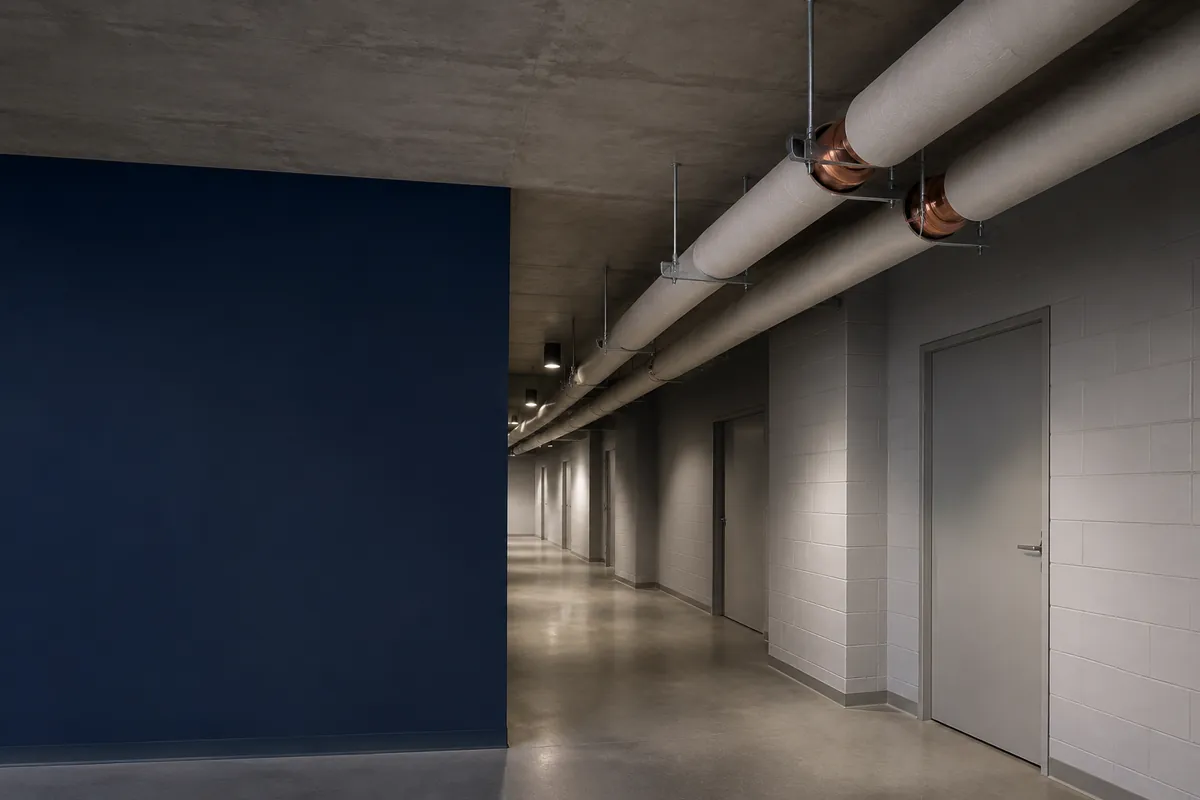
Published figures cannot give a life for your building’s pipes.
The CMHC service-life figures in this guide are averages, not forecasts for one building. The Canada Mortgage and Housing Corporation (CMHC) says its life expectancy information is representative of the average useful life of building elements under normal operating conditions, and that the actual life span of any element may vary considerably depending on the service conditions it is subjected to. Alberta’s Permit Regulation says a permit does not make or imply any assurance or guarantee about the life expectancy, durability, operating performance or workmanship of the equipment, materials or undertaking.
Use published figures as a starting point for reserve planning, then replace them with evidence from the building: its leak history, the condition of its pipe and the water it carries. To see how old Edmonton’s condominium buildings are, read Edmonton condo buildings by year built.
What published sources say.
Read the table as a spread of opinion, not a forecast. The Canadian figures come from CMHC’s report on the service life of multi-unit residential building elements, which is based on a national survey of building professionals using information dated February 29, 1996. CMHC’s table gives, for each material, a low-end average, a high-end average and a median calculated as the low and high figures added and divided by two. The United States figures come from tables published by HUD and Fannie Mae and from a National Association of Home Builders study.
| Material | Canadian survey (CMHC) | United States planning tables and surveys |
|---|---|---|
| Copper, water supply | Domestic cold water: low-end average 25 years, high-end average 38, median 32. | HUD lists copper tube at 50 years and copper or brass hard pipe at 75 years. Fannie Mae lists hot and cold water distribution at 50 years. |
| Galvanized steel, water supply | Domestic cold water: low-end average 19 years, high-end average 29, median 24. | HUD lists galvanized pipe at 40 years. |
| Cast iron, drains | Sanitary sewer: low-end average 27 years, high-end average 42, median 35. | HUD lists cast iron sanitary waste at 75 years. The United States National Association of Home Builders says concrete or cast iron waste pipes are expected to last 100 years or more. |
| Domestic hot water supply and return | No figure found. | Fannie Mae lists it at 30 years, against 50 for hot and cold water distribution. |
| PEX | No Canadian figure found. | The Plastics Pipe Institute cites a 50-year history of successful use, which is a track record and not a stated service life. |
Why the numbers differ.
Four differences help explain the spread.
- They come from different kinds of source. CMHC reports averages from a survey of building professionals. Fannie Mae describes its values as standardized average estimated useful life and tells its assessors to consider preventive maintenance, environment and other factors. HUD publishes a table by asset.
- They cover different uses. Domestic supply, hot water return and drain pipes are separate systems: Fannie Mae lists hot and cold water distribution and domestic hot water supply and return at different lives, and CMHC lists domestic cold water and sanitary sewer separately.
- CMHC describes its figures as representative of the average useful life of building elements under normal operating conditions and says the actual life span of any element may vary considerably with service conditions, so a figure like this is not a forecast for a particular building’s water. An American Society of Plumbing Engineers article by members of an AWWA committee says the potential for copper corrosion from chlorine or chloramine depends on water quality, and Health Canada says that in building hot water systems a water temperature above 60 °C in the presence of high flow velocity is a factor in erosion corrosion, while noting that no simple relationship exists between temperature and corrosion processes. See pinhole leaks in copper pipes and hot water recirculation and pipe corrosion.
- They are not local, and the Canadian one is dated. The Canadian survey used information from 1996, and in the research for this guide no Alberta- or Edmonton-specific pipe service-life table was found.
What decides how long a pipe lasts.
Public sources tie copper corrosion to several factors: chlorine and chloramine, and the water quality that decides how corrosive they are, anaerobic bacteria in long pipe runs, hot water above 60 °C combined with high flow velocity, and workmanship that leaves excess flux inside the tube. The Insurance Bureau of Canada ties Poly-B breakage to its reactivity with chlorine, its sensitivity to UV light and its ability to heat up quickly, and Alberta Municipal Affairs notes that Poly-B installed in Alberta primarily used copper or brass insert fittings and soft copper crimping rings, not the plastic insert fittings and aluminum bands that are reported to be more susceptible to failures causing leaks. For galvanized steel, the Insurance Bureau of Canada says corrosion begins from the inside out, causing leaks. For cast iron soil pipe, the Cast Iron Soil Pipe Institute, which was organized by American manufacturers of the pipe, says internal corrosion can be caused by strong acids or other aggressive reagents with a pH of 4.3 or lower if they stay in contact with it for an extended period.
None of these factors is visible from a calendar. That is why age alone is a poor guide.
Use the leak history, not just the calendar.
A pipe that is old and quiet is different from a pipe that is young and leaking. The rate of failures in one material, one riser or one line is stronger evidence than a date. The Insurance Bureau of Canada says galvanized steel or lead pipes are more likely to crack and leak, and that upgrading to copper or plastic plumbing can help reduce the cost of insuring a home. That advice is written for homeowners’ policies.
A leak log with dates, locations, hot or cold lines and repairs, kept for every event, is a useful document for a board that is discussing pipe life.
How reserve fund studies treat pipes.
Alberta’s Condominium Property Act requires a corporation to maintain a reserve fund reasonably sufficient for major repairs and replacement of, among other things, the common property. The Condominium Property Regulation requires a study by a reserve fund study provider that lists depreciating property that may need repair or replacement within the next 30 years or longer, records its present condition and estimates when each component will need to be repaired or replaced. A new study is required on or before 5 years after the most recent plan was approved.
Pipes inside walls are hard to inspect: the regulation requires an on-site visual inspection of the visible components and a review of documents. A board can ask the provider what evidence it used for the piping line, whether leak history, pipe samples or a condition assessment were considered, and then share new evidence at the next update.
Why pipe life matters to insurance.
The Insurance Bureau of Canada said in 2020 that if an Alberta condominium corporation could not obtain insurance because of numerous water damage claims, a risk manager it was hiring would advise on the maintenance required to reduce that risk. Its task force reported that Alberta condominium corporations had experienced an increase in both the frequency of claims and the cost of repairs, and that older properties were especially at risk. Alberta’s Superintendent of Insurance said increasing frequency and severity of condominium property claims were among the factors driving up condominium insurance costs.
What a board can do.
Turn a planning figure into a building-specific answer.
- Keep the leak log, and map each event to a riser, floor and line.
- Gather drawings, permits and renovation records so the materials are known. See pipe materials in condominium buildings.
- Ask for a pipe condition assessment before choosing between repair, treatment and replacement. See pipe condition assessment for condominiums.
- Give the reserve fund study provider the leak history and any assessment findings, and ask how the piping estimate was made.
- Tell owners early. Planning a major pipe project over several years can help a board avoid raising a special levy, which Alberta.ca describes as a one-time or temporary assessment imposed on owners to raise money for an unbudgeted expense or shortfall, with major repairs and insufficient reserve funds among the examples. See special assessment after water damage.
Where ProShield fits.
ProShield does not forecast pipe life or replace pipe. It investigates leaks, documents where water appeared and how it behaves, and helps a building assemble the evidence that a reserve fund study, an engineer or a board needs. A LEaC Shield assessment starts from exactly those records.
Sources and further reading
- CMHC: Capital replacement planning manual (2003)
- Alberta Permit Regulation (Alta Reg 204/2007)
- US HUD: Capital needs assessment, estimated useful life table
- Fannie Mae: Multifamily property condition assessment, estimated useful life tables (2019)
- National Association of Home Builders: Study of life expectancy of home components (2007)
- Plastics Pipe Institute: PEX pipe and tubing
- ASPE Pipeline: Plumbing design for success, understanding and preventing copper corrosion (2021)
- Health Canada: Guidelines for Canadian Drinking Water Quality, technical document on copper (2019)
- Foundation for Water Research (UK): Causes of copper corrosion in plumbing systems (2017)
- Copper Development Association: Copper Tube Handbook (2026)
- Insurance Bureau of Canada: Know your home’s history and the issues lurking within its walls (2025)
- Alberta Municipal Affairs: Safety tips on polybutylene (Poly-B) pressure water piping (2016)
- Cast Iron Soil Pipe Institute: Cast iron soil pipe and fittings handbook
- Insurance Bureau of Canada: How home insurance rates are set
- Alberta Condominium Property Act
- Alberta Condominium Property Regulation (Alta Reg 168/2000)
- Insurance Bureau of Canada: IBC to hire risk manager to assist condominium corporations (2020)
- Insurance Bureau of Canada: National Commercial Insurance Task Force midterm report (2020)
- Alberta Superintendent of Insurance: Interpretation bulletin 03-2020 (2020)
- Government of Alberta (Service Alberta and Red Tape Reduction): Special levies (Condominium information)
- City of Edmonton: Commercial safety codes inspections
- Government of Alberta: Reserve funds (condominium information)
Questions people ask
How long do copper pipes last in a condo?
Sources differ widely. A CMHC survey of building professionals gives low-end and high-end averages of 25 and 38 years for copper pipes in the domestic cold water systems of multi-unit residential buildings, while HUD’s table lists copper tube at 50 years. Neither is specific to Alberta, and CMHC says the actual life span of any element may vary considerably depending on the service conditions it is subjected to.
How long does PEX last?
No Canadian service-life figure for PEX was found. The Plastics Pipe Institute cites a 50-year history of successful use, which is a track record rather than a stated service life.
How long do galvanized pipes last?
A CMHC survey of building professionals gives low-end and high-end averages of 19 and 29 years for galvanized pipes in the domestic cold water systems of multi-unit residential buildings, and HUD’s table lists galvanized supply pipe at 40 years. The Insurance Bureau of Canada says galvanized steel or lead pipes are more likely to crack and leak.
Does a passed plumbing inspection guarantee how long the pipe will last?
No. Alberta’s Permit Regulation says a permit does not make or imply any assurance or guarantee about life expectancy, durability, operating performance or workmanship. The City of Edmonton describes its plumbing inspections as a point-in-time audit to ensure the work meets minimum safety standards.
How often must a condominium update its reserve fund study?
Alberta.ca says a reserve fund study must be completed no less than every 5 years and should consider a 30-year timeframe.