
Special assessments and special levies
Condo special assessments in Alberta: a guide for the board
The Condominium Property Act calls it a special levy. This page also uses the phrase special assessment, which is how CK's own services page puts it. Alberta.ca describes a special levy as a one-time or temporary assessment imposed on owners to raise money for an unbudgeted expense or shortfall. Below: who can approve one, what owners must be told, what a board should have in hand before it asks owners to pay, and what CK says it does for a board facing one.
Last reviewed . General information for condominium boards, not legal or engineering advice.
What a special levy is, and what it can pay for
Alberta.ca describes a special levy as a one-time or temporary assessment imposed on owners to raise money for an unbudgeted expense or shortfall. Its examples include major repairs and an unexpected insurance deductible.
The page says a special levy may be used, among other purposes, to pay for unexpected and urgent maintenance, repair or replacement of the corporation's real and personal property, the common property or managed property, and to pay for a capital improvement if the corporation has passed a special resolution approving it.
Who can approve one
Alberta.ca says condominium boards can approve special levies through a board resolution, and that they do not need owners' approval by a vote at a general meeting unless the levy is for a capital improvement.
The Condominium Property Act says what the board's resolution must contain. Section 39.1(1) requires it to set out the purpose of the levy, the total amount to be levied, and the date by which it is to be paid or the dates of the instalments. It must also set out how each unit's share is worked out: by unit factor or, if the bylaws provide for it and subject to the regulations, on another basis.
If the levy is for a capital improvement, section 39.1(3) requires a special resolution before the board may approve it. The Act defines a special resolution as one passed at a properly convened meeting by a majority of not less than 75% of all the persons entitled to vote and representing not less than 75% of the total unit factors for all the units, or one agreed to in writing by not less than 75% of the persons the Act describes.

Repair, replacement or capital improvement?
Whether owners must approve a levy first turns on whether it is for a capital improvement. Alberta.ca describes capital improvements as additions or alterations that may increase the property's value, while reserve fund expenses are generally for repairing or replacing existing property.
Section 38(4) of the Act says what is not a capital improvement. For the purposes of sections 38 and 39.1, replacing existing real and personal property of the corporation, the common property or managed property with the contemporary equivalent of an obsolete property, or with a lower-cost equivalent of the existing property, is not a capital improvement. Section 38(4)(b) adds any other replacement prescribed by the regulations.
Section 38(4) does not say whether replacing a building's stucco, windows or roof is the contemporary equivalent of an obsolete property or a lower-cost equivalent of the existing property, and Alberta.ca does not say whether a particular replacement is a capital improvement. That is a question to settle with the corporation's lawyer, using the engineer's scope and the options in front of the board, before the board decides how to approve a levy.
What the corporation must already do
Alberta.ca describes a special levy as money raised for an unbudgeted expense or shortfall, with insufficient reserve funds among its examples, so one early question for a board is how large that gap really is. The Condominium Property Act makes it a duty of the corporation to keep in a state of good and serviceable repair, and properly maintain, the real and personal property of the corporation, the common property and managed property (section 37(2)(a)). It requires the corporation to establish and maintain a reserve fund reasonably sufficient for major repairs and replacement that do not normally occur annually (section 38(1)).
Alberta.ca says a condominium reserve fund study must be completed no less than every 5 years and should consider a 30-year timeframe. The Act also allows reserve fund money to be used for a reserve fund study and report and for any other report prepared by an expert examining the condition of the real and personal property of the corporation, the common property and managed property (section 38(1.01)).
What owners must be told, and when
As soon as possible after passing the levy resolution, the board must inform each owner of the purpose of the levy, the total amount, the method used to determine each unit's share, the amount payable for the owner's unit and the payment date or instalment dates (section 39.1(4)). A contribution is due and payable on the passing of the board's resolution, in accordance with its terms (section 39.2(1)).
Alberta.ca says the legislation does not require a board to convene an owners' meeting to inform them about a special levy, and suggests an information meeting may help, with professionals such as an engineer, contractor or accountant attending when the cost is for a specific purpose. In a passage on how to fund repairs and replacement, Service Alberta's March 2026 tip sheet suggests a board could discuss alternatives with owners at a general meeting before making the final decision. It adds that good community relations suggest owners should not be surprised by the board's final decision.
What to have before owners are asked to pay
Section 28(2) of the Act says every member of a board, in exercising the powers and performing the duties of the office, must act honestly and in good faith with a view to the best interests of the corporation, and exercise the care, diligence and skill that a reasonably prudent person would exercise in comparable circumstances. The Act does not say which steps meet that standard, so a board may want a written record of how the number was built.
Before it asks owners to pay, a board can put these in writing:
- The problem. What failed or is at risk, and how the board knows: an engineer's report or test results, not a contractor's opinion alone.
- The scope. What the work includes and what it leaves out.
- The budget by trade. Figures from bids that were all asked to price the same scope.
- The alternatives. Repair, phased work or full replacement, each with its cost, timing and risk.
- The approval route. Whether the levy is for a capital improvement, and so needs a special resolution first.
- The schedule. When the work happens and what owners will live through.
- How the cost is shared. The amount for each unit and when it is due.
- What is left in the reserve fund once the work is paid for.
When the first number is not the right number
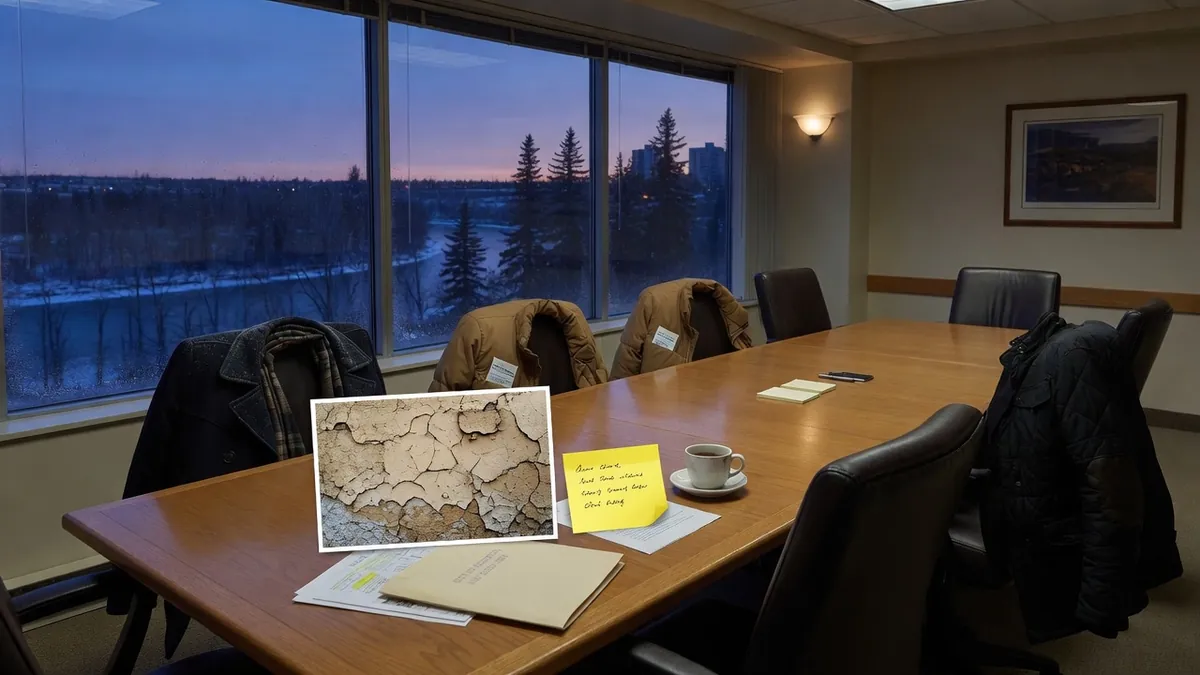
CK's own account of the Aspen Close condominium describes a budget that changed as it was reviewed and tested. The board had no construction or renovation experience, contractors had quoted that 40-year-old stucco needed to be removed and replaced, and the budget was initially set at $52,000 per unit. After a review with contractors and an engineering firm the estimate changed to $35,000 per unit. After unit testing, CK reports, it was reviewed and set at $32,179 per unit. Further inspection found the stucco and underlay siding in good enough condition not to replace completely, so damaged sections were repaired and the stucco was coated to seal it.
That is a drop between two budgets, $19,821 per unit, and CK's account does not give the final cost. It describes one building, so it does not show that another building's budget will come in lower; what a board can take from it is to test before a figure goes to owners. The projects page sets the account out step by step.
What CK does for a board facing a special assessment
CK describes its work as complete budgeting overviews of proposed and planned renovations, including special assessments. CK says it meets the engineering firm that works for the corporation, that deconstructive testing is done with the engineer to fine-tune the scope of the project, and that it contacts each appropriate contractor directly. It says it presents a report of its findings to the corporation and gives recommendations on which contractors the board should hire. It also says every contractor bid and estimate goes directly to the condominium corporation, that the board can review all estimates from contractors rather than a single combined bid, and that each contract is signed directly by the board.
CK says it works solely for the corporation and its board, that the corporation pays CK directly and that it is not paid by any contractor. See contractor bids and construction management.
Questions boards ask
Is a special assessment the same as a special levy?
The Condominium Property Act uses the term special levy, which Alberta.ca describes as a one-time or temporary assessment imposed on owners to raise money for an unbudgeted expense or shortfall. CK's own services page uses the phrase special assessment. This page uses the two terms for the same charge.
Can the board approve a special levy without an owners' vote?
Alberta.ca says boards can approve special levies through a board resolution and do not need owners' approval by a vote at a general meeting unless the levy is for a capital improvement. If it is for a capital improvement, section 39.1(3) of the Act requires a special resolution first. Section 38(4) lists some replacements that are not capital improvements, and whether a particular project is a capital improvement is a question for the corporation's lawyer.
What must the notice to owners say?
Section 39.1(4) of the Act requires the board, as soon as possible after passing the resolution, to inform each owner of the purpose of the levy, the total amount, the method used to determine each unit's share, the amount payable for the owner's unit and the payment date or instalment dates.
How is each owner's share worked out?
Section 39.1(1)(c) of the Act requires the board's resolution to set out either the method of determining each unit's share by unit factor or, subject to the regulations and if the bylaws provide for it, a method based on something other than the unit factors.
Can the reserve fund pay for the work instead?
Section 38(1) of the Act requires the corporation to maintain a reserve fund reasonably sufficient for major repairs and replacement that do not normally occur annually. Section 38(2) says funds shall not be taken from it for making capital improvements unless the removal is authorized by a special resolution or is necessary to maintain property referred to in section 38(1) to comply with health, building and maintenance and occupancy standards as required by law, and there will be sufficient funds remaining to meet the requirements of section 38(1).
Alberta.ca says the fund is not to be used for ongoing maintenance and may be used for capital improvements if they are included in the reserve fund study or approved by special resolution of the corporation; the study route is not in the wording of section 38(2). For the purposes of section 38, section 28 of the Regulation says a repair to or replacement of depreciating property is not to be construed as a capital improvement if it was included in the current reserve fund report. Whether a particular project can be paid from the reserve fund is a question for the corporation's lawyer.
What if an owner does not pay?
Alberta.ca says the Act and regulations permit the corporation to recover collection costs, and that it may also file a caveat against the title to the owner's unit for the levy amount, legal expenses and other professional fees associated with the caveat.
What if an owner disagrees with the levy?
Alberta.ca says an owner who disagrees with a special levy may raise the issue with the board. It does not say an owner may refuse to pay while the issue is raised. Service Alberta's fact sheet on resolving condominium disputes is listed under sources and further reading.
How does CK help with a special assessment?
CK says it provides complete budgeting overviews of proposed and planned renovations, including special assessments. It says it meets the engineering firm that works for the corporation, has deconstructive testing done with the engineer to fine-tune the scope, and has contractor companies bid on individual trades. CK says it presents a report of its findings to the corporation and gives recommendations on which contractors the board should hire. It says each contract is signed directly by the board.
Sources and further reading
Legal points on this page were checked on 30 September 2026 against the Condominium Property Act (consolidated to 14 May 2026) and the Condominium Property Regulation (consolidated to 15 February 2026). The law changes, so check the current text.
- Alberta.ca: Special levies — the province's plain-language guide
- Alberta.ca: Reserve funds
- Condominium Property Act (Alberta King's Printer) — the statute; this page used the consolidation current to 14 May 2026
- Condominium Property Regulation (Alberta King's Printer) — this page used the consolidation current to 15 February 2026
- Service Alberta: Owning a condominium (tip sheet, 2026)
- Service Alberta: Resolving condominium disputes (fact sheet, March 2026)
- CCI North Alberta — educational sessions for members and non-members