
Building envelope
Condo building envelope and stucco: repair when repair is enough
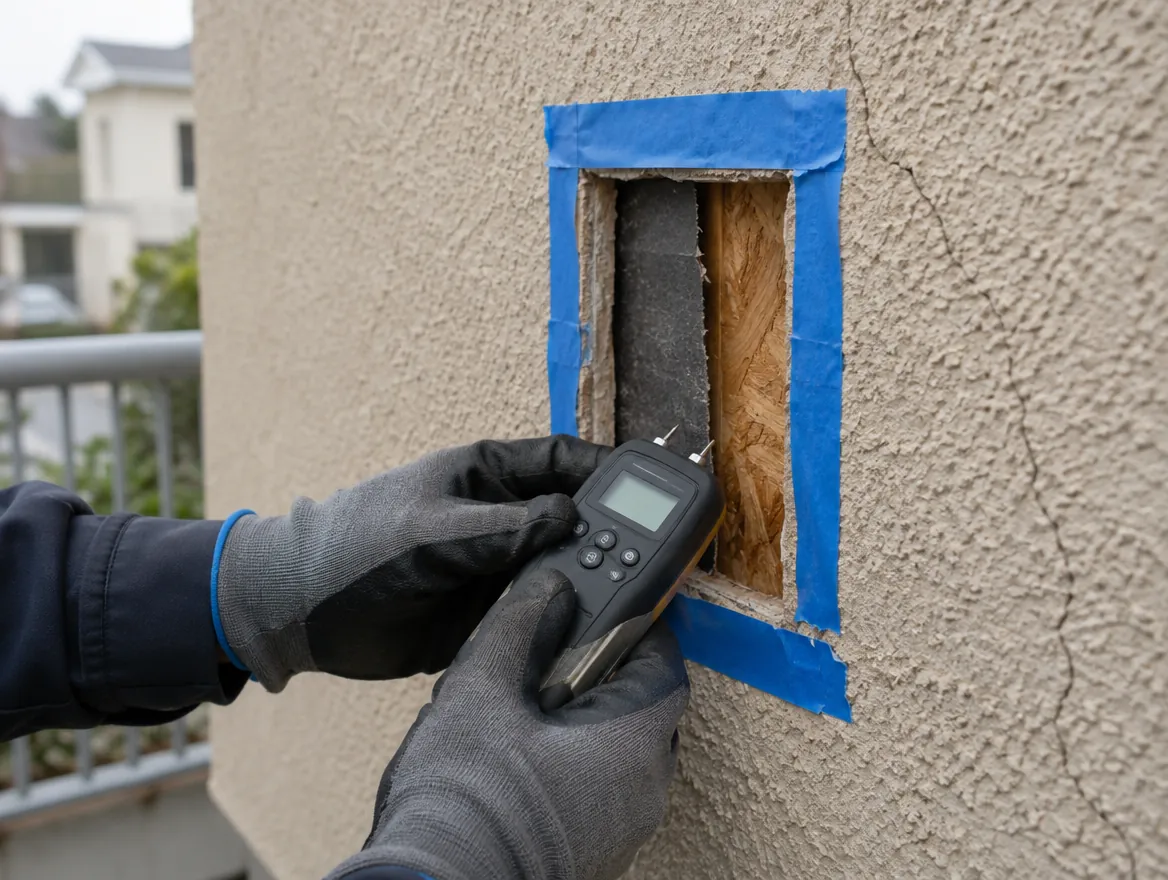
When a contractor quotes to replace a condominium's stucco, the board has a decision to make. CK says building-envelope inspection with “test unit” reporting by an engineering firm is among its services, and that deconstructive testing is done with the engineer to fine-tune the scope of the project. This page explains the envelope, the terms a joint bulletin of the Alberta Association of Architects and APEGA defines for repair, rehabilitation and renewal, the City of Edmonton's permit rules and what CK says it does.
Last reviewed . General information for condominium boards, not legal or engineering advice.
What the building envelope is
For the purposes of Alberta's Condominium Property Regulation, the building envelope is the collection of components that separate conditioned space from unconditioned space, the exterior air or the ground, or that separate conditioned spaces intended to be conditioned to temperatures differing by more than a stated threshold at design conditions. The Regulation says it includes the roofing and sub-roof, cladding components and balcony membranes and sealants, as well as parkade membranes and sealants that are accessible for non-invasive visual inspection.
CMHC's manual on air leakage control in multi-unit residential buildings describes the envelope in plainer words: the indoor-outdoor environmental separation made up of the roof, walls, windows, doors and foundation of buildings.
Windows and doors matter to the board because of who is responsible for repairing them. Section 9(2)(b) of the Condominium Property Act says all doors and windows of a unit that are located on exterior walls of the unit are part of the common property unless the condominium plan stipulates otherwise. Section 37(2)(a) makes it a duty of the corporation to keep the common property in a state of good and serviceable repair and properly maintain it. Section 9(2) is itself subject to section 9(2.1), which makes an exception for some condominiums, so check the plan and ask the corporation's lawyer.
Why moisture can damage a wall where you cannot see it
CMHC's air leakage manual says moisture carried by air leakage can corrode fasteners, steel studs and other structural assemblies, deteriorate exterior cladding such as brick, stucco and concrete, wet thermal insulation and damage interior drywall or exterior sheathing materials and finishes.
An inspection can be limited to what is visible. A reserve fund study, for example, is required to include an on-site visual inspection of all visible components of the depreciating property (section 23(2)(a.1) of the Regulation). What testing, if any, a wall needs beyond that is a question for the corporation's engineer.
Reasons a board might start an envelope review
Any of these can put the exterior of the building on the board's agenda:
- A contractor's quote to remove and replace the stucco or siding.
- Water stains or damage that owners report inside their units.
- An exterior component flagged in a reserve fund study.
- The same repair being made at the same place more than once.
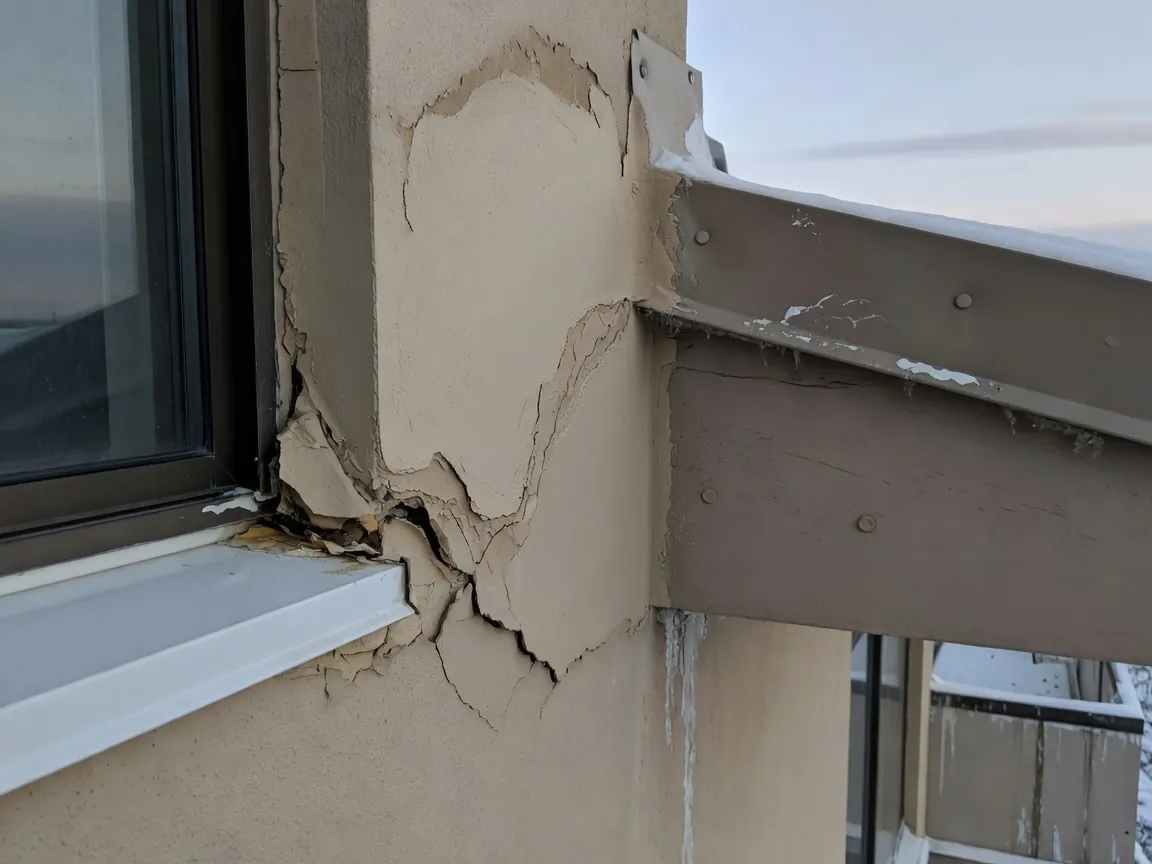
- Cracking, bubbling or loose cladding at windows, roof edges or balconies that the board can see from the ground.
Inspect and test before the board chooses
CK's own services page lists building-envelope inspection with “test unit” reporting by an engineering firm. CK says it meets the engineering firm that works for the condominium corporation, that deconstructive testing is done with the engineer to fine-tune the scope of the project, and that all engineering services are provided independently and directly to the condominium. CK's services page does not define “test unit”, and its FAQ does not describe the testing further.
In its air leakage manual, CMHC says that if a moisture problem is confined to one or a few specific areas of a building, it may be necessary to consult an engineering or architectural firm that specializes in building envelope work before beginning any remedial actions. APEGA says only professional members and companies it licenses have the right to practise engineering independently in Alberta. It calls its member directory the only official directory for confirming whether an engineer is licensed to practise in Alberta.
Section 38(1.01) of the Condominium Property Act allows a corporation's reserve fund to be used for a reserve fund study and report and for any other report prepared by an expert examining the condition of the corporation's property, the common property and managed property. Ask the corporation's advisers whether the report the board needs can be paid from the reserve fund.
Repair, rehabilitation or renewal: three terms from an Alberta bulletin
A joint practice bulletin of the Alberta Association of Architects and APEGA (version 1.1, May 2024) includes three definitions for building envelope work. They are the bulletin's own, not statutory definitions, and they give a board a useful question to put to its engineer.
| Term | What the bulletin says it is |
|---|---|
| Repair | Reconstruction or replacement of specific elements so the envelope can fulfil its originally intended functions, undertaken because of a premature failure that is non-systemic, focused on one specific aspect of the construction or localized to one area of a building. |
| Rehabilitation | A program of comprehensive and systemic reconstruction of the envelope assemblies and details so that it can fulfil its originally intended functions, most often initiated because of premature failure. |
| Renewal | A program of systemic reconstruction or replacement of aged elements, similar in scope to rehabilitation but not associated with premature failure: the work is needed because an element has reached the end of its service life through normal wear and aging. |
Repair or replace: CK's account of Aspen Close
CK's own account of the Aspen Close condominium says contractors had quoted that its 40-year-old stucco needed to be removed and replaced, and that the budget was initially set at $52,000 per unit. It says that after further inspection the stucco and underlay siding were in good enough condition not to be replaced completely, that damaged sections were repaired and that the stucco was then coated with an elastomeric coating to seal it. CK reports that after unit testing the budget was reviewed and set at $32,179 per unit. Those are budgets, and CK's account does not give a final cost.
That is one condominium's account, and it is not evidence that repair is right for any other building. Whether repair is enough for a board's own building is a question for the corporation's engineer. The full account is on the projects page.
Permits in Edmonton
On its page about changes to existing non-residential and large-scale residential buildings, the City of Edmonton lists, among the changes that need permits, renovating a condominium, adding exterior balconies to an apartment building, and changes to exterior doors, windows, walls and roofs. It says permits are not required for cosmetic interior changes, or for re-roofing or re-siding with materials of a similar type and assembly. The page does not say what counts as similar type and assembly, so confirm with the City for your project.
The City explains that a development permit ensures structures are allowed in their location and that a building permit audits project design and construction under the Alberta Safety Codes Act and gives permission to begin construction. Starting construction without written permission can result in stop-work orders, fines or administrative penalties. CK says it works on behalf of the condominium corporation with the City of Edmonton for building and development permits.
Questions to ask before approving a replacement
A board can put these to the contractor and the engineer before it votes:
- What did the testing show about the condition behind the surface, and who did the testing?
- Is the failure localized, systemic or the result of normal aging, in the engineer's words?
- Is the scope based on testing, or only on a visual inspection from the outside?
- What would a repair-and-coat option cost, what would it fix, and what would it leave for later?
- If replacement is recommended, what exactly is being replaced, and why can it not be repaired?
- What is the unit price for extra work if rot is found, and who confirms that it is needed?
- Is the engineer licensed in Alberta, and does the work need a building or development permit?
How CK helps
CK says it meets the engineering firm that works for the condominium corporation, reviews the scope of work and contacts each appropriate contractor directly, with contractor companies bidding on individual trades. It lists complete budgeting of a proposed or planned renovation among its services. CK says it creates a report of its findings that is presented to the condominium corporation and that it gives recommendations on which contractors the board should hire. It says the board can review all estimates rather than a single combined bid, and that each contractor's contract is signed directly by the board.
Once the contracts are finalized, CK says, it sets up on site and oversees the renovation from start to finish. It sets up schedules and daily progress and, as required, meets the engineer to review site conditions and provide “sign-off” when rot is discovered. CK also says it works on behalf of the condominium corporation with the City of Edmonton for building and development permits. See construction management and contractor bids.
Questions boards ask
Can stucco be repaired instead of replaced?
Sometimes. CK's website describes one condominium, Aspen Close, where further inspection found the stucco and underlay siding in good enough condition not to replace completely, so damaged sections were repaired and the stucco was coated with an elastomeric coating to seal it. That is one condominium's account, not evidence that repair is right for another building. Whether repair is enough for a particular building is a question for the corporation's engineer.
What is a test unit?
CK's own services page lists building-envelope inspection with “test unit” reporting by an engineering firm but does not define the term. CK's FAQ says deconstructive testing is done with the engineer to fine-tune the scope of the project. Ask the engineer to state in writing where the tests will be done, what the testing involves and what the report will say.
Is a reserve fund study the same as an envelope assessment?
Not automatically. Section 23(2)(a.1) of the Regulation requires a reserve fund study provider, in carrying out the study, to conduct an on-site visual inspection of all visible components of the depreciating property. A joint practice bulletin of the Alberta Association of Architects and APEGA says a registered professional may also provide services for other types of projects, including building envelope condition assessments. Ask the study provider and the corporation's engineer, in writing, what each report will and will not examine.
Who is responsible for repairing windows and exterior doors?
Section 9(2)(b) of the Condominium Property Act says all doors and windows of a unit that are located on exterior walls of the unit are part of the common property unless the condominium plan stipulates otherwise. Section 37(2)(a) makes it a duty of the corporation to keep the common property in a state of good and serviceable repair and properly maintain it. Section 9(2) is itself subject to section 9(2.1), which makes an exception for some condominiums, so check the plan and ask the corporation's lawyer.
Does an exterior project need a permit in Edmonton?
On its page about changes to existing non-residential and large-scale residential buildings, the City of Edmonton lists changes to exterior doors, windows, walls and roofs among the changes that need permits, and says permits are not required for re-roofing or re-siding with materials of a similar type and assembly. Confirm with the City for your project.
Can the reserve fund pay for an envelope report?
Section 38(1.01) of the Condominium Property Act allows reserve fund money to be used for a reserve fund study and report and for any other report prepared by an expert examining the condition of the corporation's property, the common property and managed property. Ask the corporation's advisers how that applies to the report the board needs.
How can a board check that an engineer is licensed?
APEGA says to use its member directory to confirm whether an engineer or geoscientist is licensed to practise in Alberta. It calls the directory the only official directory and says it is updated every 24 hours. APEGA's page is about licensing; it does not vouch for an engineer's experience with stucco or envelope work, so ask about that separately.
Which exterior work can CK oversee?
CK says it oversees a wide range of exterior building services for condo boards. Its own services page lists siding replacement and repair, stucco inspection, repair and replacement programs (including stucco coatings), soffit, fascia, eavestrough and downspouts, windows and doors, inspection of existing roof decks and attics, roof replacement programs, and paint, stain and decking programs. It says its inspection, repair and replacement programs are for townhome, coach home and apartment-style condominiums. The services page sets out the list.
Sources and further reading
Legal points on this page were checked on 30 September 2026 against the Condominium Property Act (consolidated to 14 May 2026) and the Condominium Property Regulation (consolidated to 15 February 2026). The law changes, so check the current text.
- Condominium Property Regulation (Alberta King's Printer) — this page used the consolidation current to 15 February 2026
- Condominium Property Act (Alberta King's Printer) — the statute; this page used the consolidation current to 14 May 2026
- City of Edmonton: Changes to existing buildings and sites — when permits are needed; confirm with the City for a particular project
- CMHC: Air leakage control in multi-unit residential buildings — a federal manual, March 2017 revision
- Alberta Association of Architects and APEGA: joint practice bulletin on building envelopes — version 1.1, May 2024
- APEGA: member directory — to check that an engineer is licensed in Alberta